 EN


A professional hair extension sample kit should help stylists compare color, construction and fullness without confusing them. It does not need every available product. Start with the decisions your target salon actually makes during consultation and ordering.
Use labeled pieces that can be handled and inspected. A kit intended to demonstrate construction should expose the attachment rather than hide it under decorative packaging.
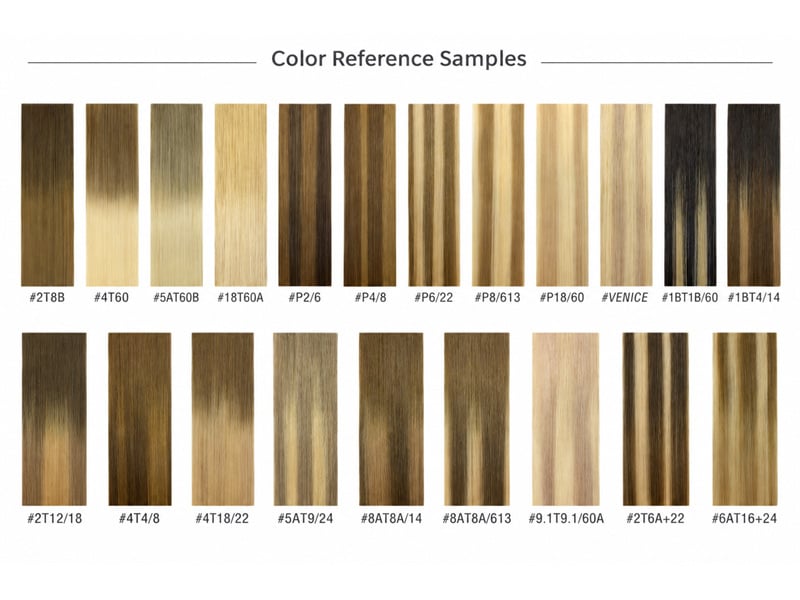
Consultation samples help communicate shade and feel. Performance samples are used for controlled washing and handling. Master references define what an approved order should match. Those roles should not be combined in one increasingly worn swatch.
Label working samples and replace them when their condition changes. Protect master references from repeated handling and light exposure. A faded consultation ring should not be used to reject a fresh delivery.
Include the methods the salon is equipped to install. Explain differences in seam or tab construction using the actual sample, not a digitally enhanced illustration. If two fullness options are included, match length and net weight so the comparison remains useful.
Use double drawn vs super double drawn to explain end distribution. Avoid suggesting that a sample kit proves a universal grade or a specific wear duration.
Give each item a product identifier, shade, length and revision or date. Add a simple order reference so the stylist can request the exact item shown. Note where a sample is illustrative and differs from the saleable product.
For Genius Weft hair extensions, show the seam and approved cutting instructions. Include a link or QR code to current product information only after the destination has been tested.
Ask stylists which comparisons helped them choose and which information was missing. Track requests for colors, lengths and constructions before expanding the kit. Replacing a rarely used sample can be more useful than adding another similar blonde.
Keep commercial details current and avoid printing promises that change with order size. Discuss your product requirements with Fasimei to plan a kit around your intended professional range and sample-testing process.
Only when full packs are necessary for the decision or performance evaluation. Clearly label smaller demonstration pieces.
Do not sell handled or tested samples as new products. Keep demonstration inventory separate.
A dated price reference can work, but maintain a clear route to the current quotation and applicable terms.