 EN


Double drawn and super double drawn generally describe sorting intended to increase fullness toward the ends. Super double drawn usually indicates a fuller-end option within a supplier's own range. The labels do not establish a shared percentage across suppliers.
For professional buying, ask what the grade means for the exact length and product being quoted. A useful comparison includes equal net weight, the same finished length and photographs arranged under matching conditions.
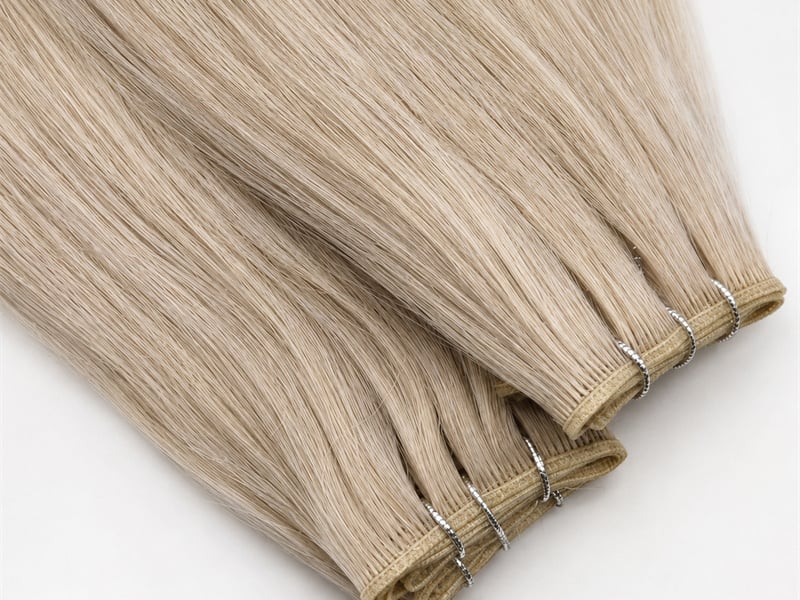
A larger share of long strands can produce a stronger perimeter at the finished length. That can suit clients seeking a fuller result or reduce the amount a stylist needs to trim. It does not automatically improve cuticle condition, processing quality or attachment construction.
Some salon looks require softer ends. A highly full bundle may still need shaping to blend with the client. Choose fullness for the intended result rather than treating the most expensive grade as the only professional choice.
A percentage is meaningful only with a defined numerator, denominator and length threshold. Ask whether the supplier is counting strands, measuring mass or making a visual assessment. Also clarify whether the target applies before or after trimming.
Do not compare a visual estimate from one supplier with a measured result from another. If no repeatable measurement exists, use a retained approved sample and describe the appearance you expect without inventing numerical precision.
Lay equal-weight samples flat against the same contrasting background. Align the attachment or top reference consistently and compare the lower section without stretching or artificially spreading the hair. Record the lighting and photograph the ends before styling.
Include the accepted standard in your hair extension product specification sheet. Evaluate Genius Weft hair extensions with their construction intact because attachment weight and width can affect how a sample appears.
A fuller-end option may be suitable for a pronounced blunt result, while a softer distribution may blend more naturally into some layered styles. Length, installed weight and the client's starting haircut all influence the finished result.
Request two clearly identified options rather than asking for premium hair without a definition. Ask Fasimei to discuss your product requirements, including the length, desired perimeter and intended professional service.
It describes fullness expectations, not a complete quality standard. Hair condition, color processing and construction need separate evaluation.
Do not assume one. Require the supplier to define and demonstrate any stated percentage.
They can illustrate appearance but can mislead when weight, lighting, spreading or trimming differs. Compare physical samples.