 EN
EN

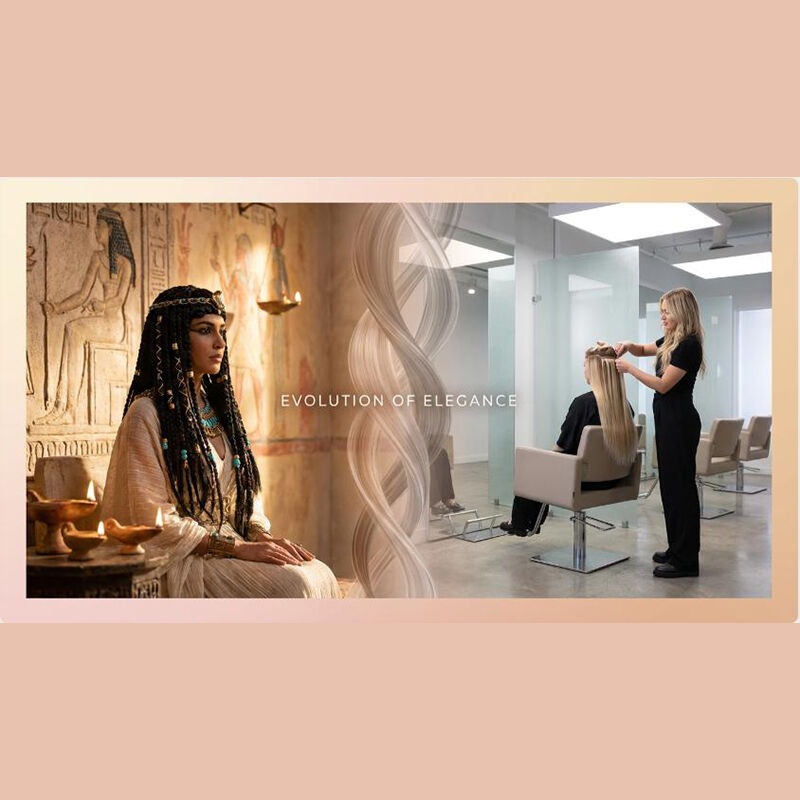
The hair extension industry has a rich history that spans over 5,000 years, evolving from a status symbol in ancient civilizations to a multi-billion-dollar global commodity today.
Ancient Origins: Egypt (c. 3400 BC)
The first documented use of hair extensions dates back to Ancient Egypt. Both men and women used wigs and extensions to denote status, wealth, and royalty.
• Materials: Pieces were made from human hair, sheep’s wool, or plant fibers like papyrus and palm leaf.
• Attachment: They used beeswax and resin to bond the hair pieces to their natural hair.
• Coloring: Queen Cleopatra was famously known for using peacock-blue hair extensions.
The Rise of Wigs in Europe (17th–18th Century)
In the 1600s, hairpieces became a massive industry in Europe, largely due to King Louis XIII of France, who wore wigs to cover his premature baldness.
• The "Big Wig": This era popularized the "Peruke" or "Periwig." The term "bigwig" originated from this time, as only the wealthy could afford the largest, most elaborate hairpieces.
• Shift to Women's Fashion: In the late 18th century, Marie Antoinette popularized towering hairstyles (the "Pouf") that integrated large amounts of wool and supplemental hair to achieve extreme height.
The 19th Century "Hair Switches"
In the Victorian era, the industry moved toward more natural-looking integrations.
• Mail Order: By 1891, businesses like Valeria Zimmer’s in Indiana began selling "Hair Switches" (long sections of hair used to add volume to buns and braids) through mail-order catalogs.
• Pre-modern Weaves: Victorian women would often save their own hair from brushes (in "hair receivers") to create their own supplemental pads, known as "rats," to add volume.
20th Century Innovations
The modern industry took shape through several key technological leaps:
• Christina Jenkins (1950s): A pivotal figure in the industry, Jenkins patented the "Hair Weaving" process. She developed a method of sewing commercial hair onto a base of net or braided natural hair, which laid the foundation for modern sew-in weaves.
• The 1960s/70s Boom: Synthetic fibers like Kanekalon were developed, making extensions more affordable and accessible to the general public. Large "beehive" and "bouffant" styles drove massive demand.
• Simon Forbes (1980s): Often credited with inventing the "Cold Fusion" or "Great Lengths" type methods, he helped transition extensions from a niche fashion item to a common salon service.
The Modern Global Industry
Today, the industry is a global supply chain valued at billions of dollars.
• Sourcing: Most high-quality human hair comes from India (often "Temple Hair" donated in religious ceremonies), China, and Vietnam.
• Technology: The industry has branched into diverse attachment methods, including tape-ins, micro-links, keratin bonds (I-tips), and clip-ins.
• Celebrity Influence: In the early 2000s, celebrities like Paris Hilton and Victoria Beckham brought hair extensions into the mainstream, moving them from a "secret" enhancement to a celebrated fashion accessory.