 EN


Describe what is coming away
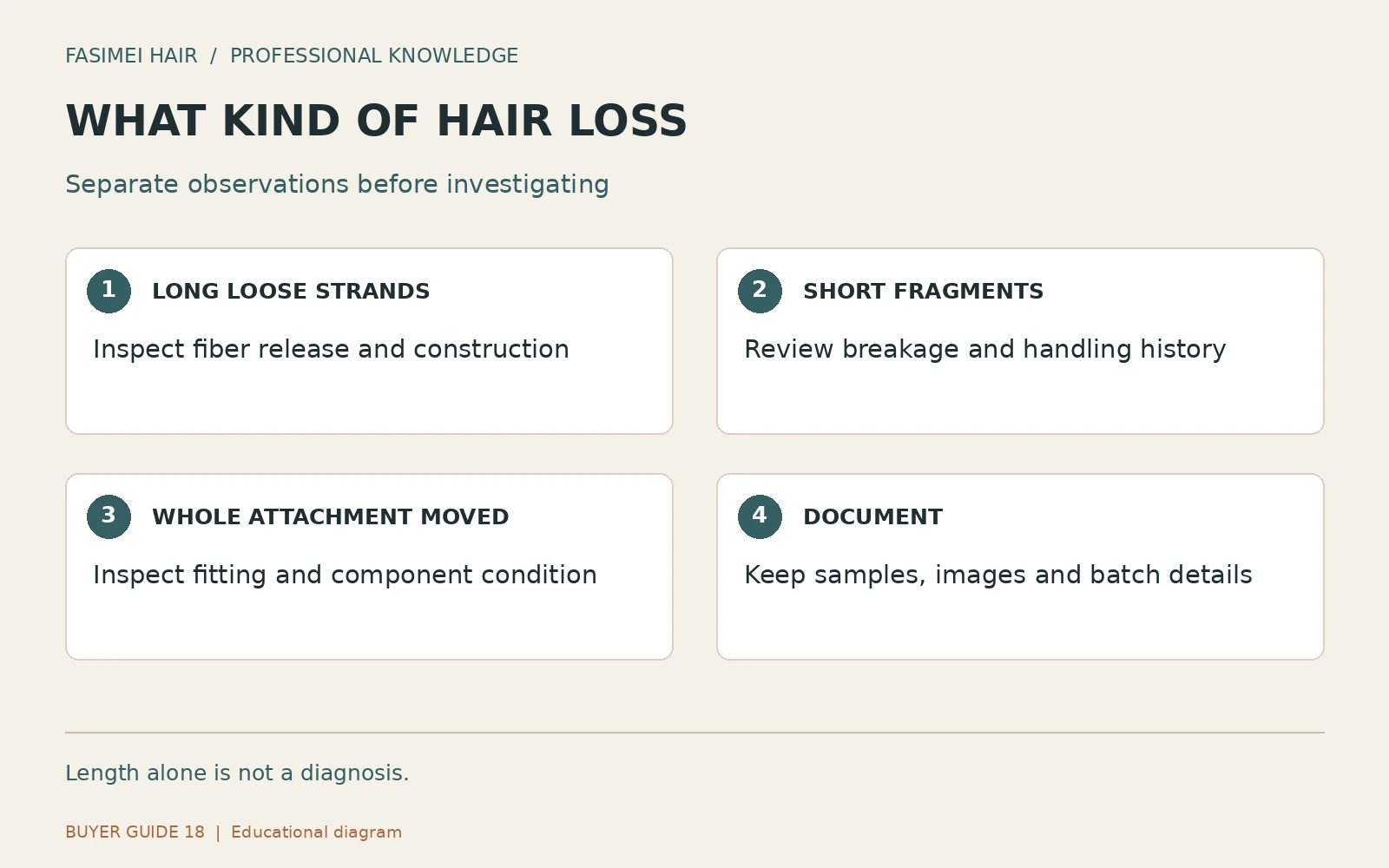
“The extensions are shedding” can describe several different events. Long strands may detach from a weft or bond, short fragments may break along the length, a complete extension may slip from its attachment, or the client may notice naturally shed hair held within the installation. Each observation needs a different investigation.
Collect a small representative sample without pulling extra strands out to prove the complaint. Photograph the pieces beside a ruler and record where and when they appeared. Separate observations from conclusions: “short fragments appeared while brushing the ends” is more useful than “the factory used weak hair.” Keep the original packaging and batch reference if available.
Inspect the length and the attachment area
Compare the loose material with the ordered finished length. A range of short pieces may suggest breakage, but length alone cannot establish a cause: short fibers may already exist in a product, and a long strand can break near the top. Look for whether the seam, tape tab or bond remains intact.
Have a trained stylist inspect installed attachments. A full tip or weft section that has moved is not the same as individual fibers releasing from it. Do not use strong pull tests on the client’s head. Any mechanical comparison should be agreed with the supplier and performed on suitable samples, not improvised through excessive force.
Review construction and alterations
Record whether the weft was cut, folded or secured and whether the supplier allows cutting for that exact construction. Document bond modification, retipping, tape replacement and removal products. “Genius Weft” or “keratin” is not a complete construction specification.
Look at the area where the loss begins. A problem concentrated at an altered edge requires a different review from short fragments distributed through the lengths. Manufacturing quality remains a legitimate question, but installation and later alterations must be recorded too. Buyers can prevent ambiguous disputes by including permitted modifications and acceptance methods in a hair extension product specification sheet.
Record handling and product exposure
Ask about brushing technique, heat tools, coloring, detangling and the timing of maintenance. Repeated force on a knot can add breakage after the initial problem, making the original cause harder to separate. Check whether the problem began immediately or after a specific service.
Photograph the current hair before further chemical or corrective treatment. If tangling preceded the loss, review why hair extensions tangle after washing as a separate symptom pathway. Do not promise that an oil or mask can reattach detached fibers or restore a broken hair shaft. Product advice should match the attachment system and the observed condition.
Agree how shedding will be evaluated
A useful purchasing agreement specifies the sample size, preparation, test procedure and reporting method. If brushing is part of the assessment, agree on the brush, starting condition and repeat sequence. An unexplained video of someone pulling hair is not a comparable test.
Avoid universal claims such as “zero shedding” or an acceptable strand count without an agreed method. Loose fibers seen when first opening a package should be documented separately from repeated loss during use. Record how many units are affected and whether an unused piece from the same batch behaves similarly. These details help the supplier investigate scope rather than debate impressions.
Submit a problem that can be investigated
Send the order reference, affected quantity, representative photographs, product history and a clear description of the loose material. Use how to document a hair extension quality complaint so the evidence stays organized. Retain the affected items and obtain return instructions before shipping anything.
Describe the outcome you need, such as an inspection, explanation or review of replacement options. Do not assume a remedy before the agreed terms and evidence have been checked. To establish a more precise evaluation process for your next weft or pre-bonded order, discuss your product requirements with Fasimei before approving production.
Frequently Asked Questions
Does short hair always mean breakage?
No. Short fibers can have several origins. Inspect the product and history rather than relying only on length.
Is a slipped bond the same as shedding?
No. Attachment movement and fiber release are different events and should be documented separately.
Can I prove quality by pulling hard on the hair?
Not reliably. Excessive force can damage the sample and is not comparable without a defined method.