 EN
EN


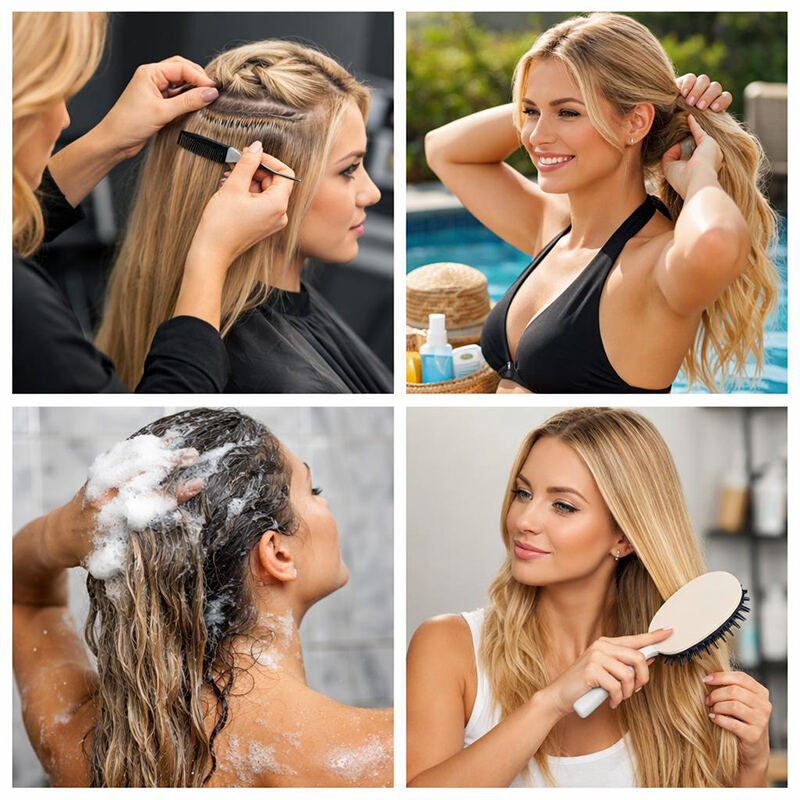
Extensões de Cabelo podem transformar completamente o visual quando aplicadas e mantidas corretamente. Seja optando por extensões com grampos, mechas ou métodos individuais colados, obter uma aparência natural e uma longa durabilidade depende de uma instalação adequada, dos cuidados diários e de hábitos informados de manutenção. As orientações a seguir são universalmente aplicáveis, quer as extensões sejam novas, quer já façam parte de uma rotina regular de beleza.
Faça: Garanta uma Instalação Profissional
A instalação correta é a base para extensões com aparência natural. É essencial pesquisar e selecionar um profissional qualificado que compreenda não apenas o método apropriado, mas também a correspondência de cores, a densidade e as técnicas de corte. Uma instalação que complemente o tipo de cabelo natural e o estilo de vida sempre proporcionará um resultado mais uniforme.
Antes de optar por extensões pela primeira vez, compreender aspectos importantes — como os requisitos de manutenção, os métodos adequados e os custos a longo prazo — pode ajudar a evitar erros comuns.
Não: Dormir com o cabelo molhado
Dormir com o cabelo molhado é um dos hábitos mais prejudiciais para as extensões capilares. A umidade provoca atrito durante o sono, causando embaraçamento, emaranhamento e estresse desnecessário tanto nas extensões quanto no cabelo natural.
Deixar o cabelo secar completamente antes de ir dormir reduz significativamente o risco de nós e prolonga a vida útil geral das extensões.
Faça: Use o xampu e o condicionador adequados
As extensões capilares devem ser tratadas como um investimento de longo prazo. Um dos erros mais comuns no cuidado com elas é o uso de produtos capilares inadequados. Xampus e condicionadores convencionais, formulados para cabelos naturais, costumam ser muito agressivos para as extensões.
Um xampu e um condicionador livres de sulfatos, especialmente formulados para extensões, ajudam a manter a maciez, o brilho e a facilidade de pentear. Uma vez expostas a ingredientes prejudiciais, as extensões frequentemente sofrem danos irreversíveis. Começar com produtos adequados desde o início é a abordagem mais segura.
Não faça: Entre na água sem preparação
Água salgada e cloro podem ser particularmente prejudiciais às extensões capilares. Se for inevitável nadar, o ideal é umedecer bem o cabelo com água limpa previamente. O cabelo previamente umedecido absorve menos sal e cloro, reduzindo os danos.
O cabelo nunca deve ser usado em tranças apertadas ou coques desalinhados ao nadar, pois isso favorece o embaraçamento. Um rabo de cavalo baixo, bem fixado, com os fios soltos suavemente enrolados e presos com grampos, ajuda a manter o cabelo controlado e protegido.
Faça: Estile considerando a direção das cutículas
As cutículas capilares se dispõem naturalmente em direção descendente, semelhante a telhas sobrepostas. Estilar contra essa direção causa aspereza, fricção e embaraçamento.
Ao secar com secador ou escovar, manter um movimento descendente ajuda a manter as cutículas lisas e achatadas, resultando em cabelos mais brilhantes e reduzindo o embaraçamento ao longo do tempo.
Não faça: Lave as extensões todos os dias
A lavagem frequente reduz a vida útil das extensões capilares. Diminuir a frequência de lavagem minimiza a exposição ao calor, ao estresse mecânico e ao acúmulo de produtos.
Para refrescar rapidamente entre as lavagens, muitas vezes é suficiente limpar apenas o cabelo natural na região da coroa — acima dos pontos de fixação das extensões.
Faça: Escove regularmente e com suavidade
Escovar com frequência é essencial para prevenir nós e embaraçamentos. Cabelos lisos e fáceis de pentear começam com uma desembaraçação regular.
Os horários recomendados para escovar incluem:
Pela manhã
Antes de dormir
Após a lavagem, assim que os produtos condicionadores de uso contínuo apropriados forem aplicados
Manter essa rotina ajuda as extensões a permanecerem impecáveis e utilizáveis por um período mais longo.
Não faça: Use corante capilar permanente
Colorir extensões sempre envolve riscos, mas corantes permanentes são especialmente desaconselhados. A coloração permanente levanta a cutícula e altera a estrutura interna do cabelo. Como as extensões passam por um pré-processamento diferente do cabelo natural, sua reação a tratamentos químicos pode ser imprevisível.
Se o ajuste de cor for absolutamente necessário, corantes semipermanentes constituem uma alternativa mais segura, embora os resultados ainda possam variar.
Faça: Siga os cronogramas adequados de manutenção
Embora as extensões capilares possam durar um tempo considerável com os devidos cuidados, nenhum método é projetado para uso indefinido. Prolongar excessivamente o período de uso é uma das principais causas de danos ao cabelo associados às extensões.
Cada método de extensão e tipo de cabelo possui uma linha do tempo recomendada para manutenção. Afirmações sobre períodos de uso excessivamente prolongados devem ser avaliadas com cautela, pois frequentemente comprometem a saúde do cabelo.
As orientações gerais de manutenção incluem:
Extensões de trança com miçangas
Cabelo fino ou frágil: aproximadamente 6 semanas
Cabelo médio: aproximadamente 7 semanas
Cabelo grosso ou forte: aproximadamente 8 semanas
Extensões com Ligação de Queratina (ponta em U)
Cabelo fino a médio: 2,5–3 meses
Cabelo grosso ou forte: 3,5–4 meses
Métodos individuais tipo I-Tip ou semelhantes
Cabelo fino ou frágil: cerca de 2 meses
Cabelo médio: cerca de 2,5 meses
Cabelo grosso: até 3 meses
Ignorar essas linhas do tempo pode causar tensão, quebra e danos a longo prazo ao cabelo natural.
Considerações Finais
A regra mais importante para extensões capilares é o cuidado constante e informado. As extensões são fundamentalmente diferentes do cabelo natural e devem ser tratadas de forma adequada. Assim que os hábitos corretos se tornarem rotina, manter extensões bonitas e com aparência natural torna-se algo fácil.
Sumário
- Faça: Garanta uma Instalação Profissional
- Não: Dormir com o cabelo molhado
- Faça: Use o xampu e o condicionador adequados
- Não faça: Entre na água sem preparação
- Faça: Estile considerando a direção das cutículas
- Não faça: Lave as extensões todos os dias
- Faça: Escove regularmente e com suavidade
- Não faça: Use corante capilar permanente
- Faça: Siga os cronogramas adequados de manutenção
- As orientações gerais de manutenção incluem:
- Considerações Finais