 EN
EN

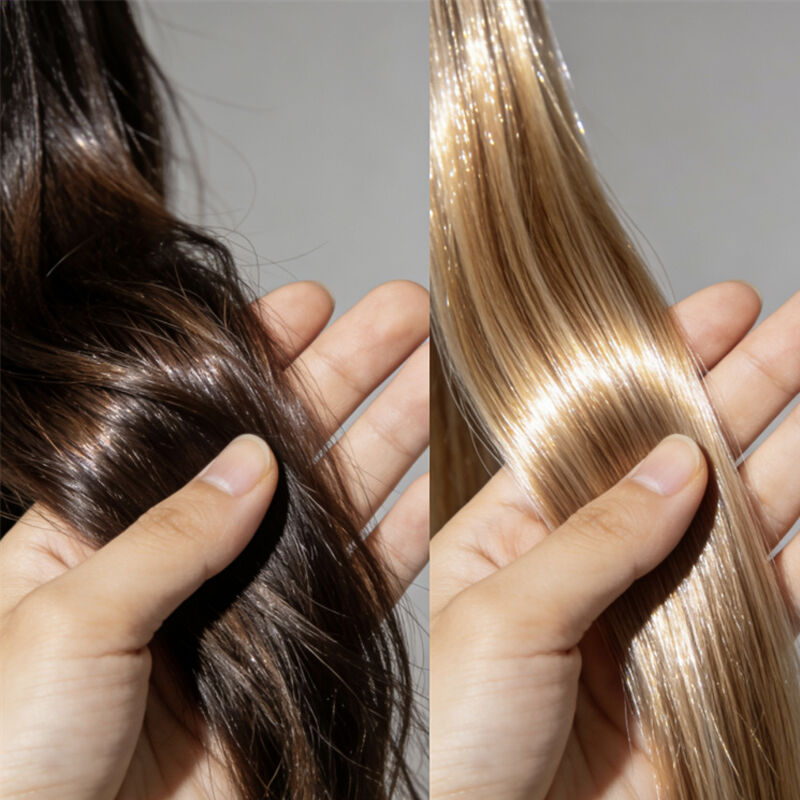
When shopping for hair extensions, wigs, or hairpieces, distinguishing human hair from synthetic hair is key to getting your money’s worth. Human hair offers natural styling flexibility and longevity, while synthetic hair is budget-friendly but has limitations with heat and durability. Below are the most actionable, at-home tests to spot the difference—no professional tools required.
Touch & Feel Test (Non-Destructive)
Run the hair strand from root to tip between your fingers.
- Human hair: Feels smooth, soft, and cool to the touch, with a natural density that mimics real scalp hair. It has subtle texture variations and doesn’t feel "plastic-y."
- Synthetic hair: Tends to be rougher, coarser, or unnaturally silky-sticky. It often feels lighter than human hair of the same length and volume, with a uniform texture throughout.
Heat Styling Test (Low-Risk Check)
Note: Test a hidden strand first to avoid damaging the piece.
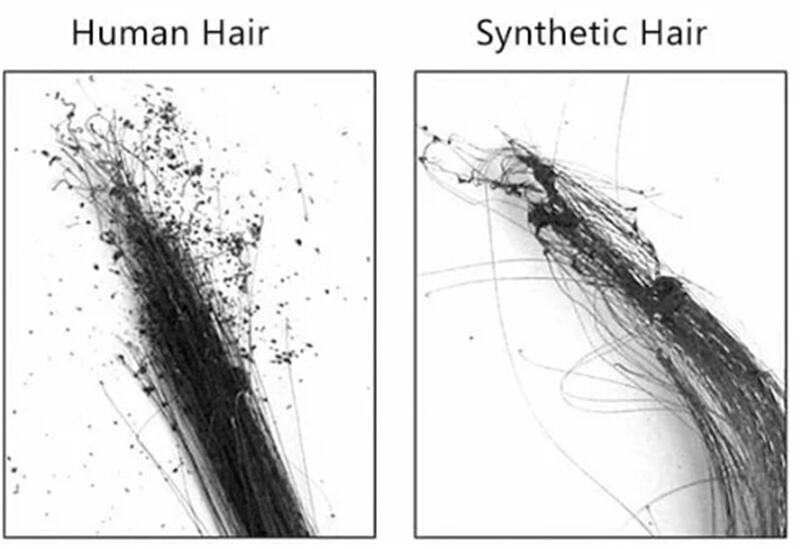
- Human hair: Can withstand heat from curling irons, straighteners, or blow dryers (use heat protectant to minimize damage). It holds styled shapes well and can be restyled repeatedly.
- Synthetic hair: Most standard synthetic fibers will melt, frizz, or shrivel when exposed to high heat. Even heat-resistant synthetics have a strict temperature limit (usually 150°C/300°F max)—always check the product label.
Burn Test (Definitive, Destructive)
This is the most reliable method—only use a tiny, hidden strand and perform it in a safe, fire-proof area (e.g., over a sink with water nearby).
- Human hair: Burns slowly like natural hair or feathers, producing a faint, organic smell. It leaves behind soft, gray ash that crumbles easily when touched.
- Synthetic hair: Melts quickly, curling into a hard, dark plastic bead. It emits a strong chemical or plastic odor and the melted residue will stick to skin if touched while hot.
Cuticle & Microscopic Inspection (Detailed Check)
Use a magnifying glass or your phone’s macro camera to examine the hair shaft.
- Human hair: Features overlapping, fish-scale-like cuticles that run in one direction. These cuticles lock in moisture and give hair its natural shine and texture.
- Synthetic hair: Has a perfectly smooth, uniform shaft with no cuticle layers. High-quality synthetics may mimic cuticle patterns, but they lack the irregularities of real human hair.
End Texture Test (Quick Visual Check)
Look closely at the ends of the hair strands.
- Human hair: Ends are naturally tapered, slightly frayed, or uneven—just like the hair growing from your scalp.
- Synthetic hair: Ends are almost always bluntly cut and perfectly uniform across the entire piece, with no natural tapering.
Color & Shine Assessment (At-Glance Tip)
- Human hair: Has subtle, multi-tonal color variations (even "solid" shades have tiny differences in pigment). It has a soft, natural shine that doesn’t look overly glossy.
- Synthetic hair: Often has an unnaturally uniform, flat color with a plastic-like, high-gloss finish. Premium synthetics may reduce this shine, but they still lack the subtle color depth of human hair.
Water Absorption Test (Easy & Non-Destructive)
Dampen a small section of the hair and observe its behavior.
- Human hair: Absorbs water quickly, feeling heavier when wet. It takes time to air-dry and retains a natural, slightly wavy texture after drying (if not styled).
- Synthetic hair: Repels water slightly, drying much faster than human hair. It may tangle more easily when wet and often bounces back to its original shape without styling.
Final Tips for Accurate Identification
- Combine tests: High-quality synthetic hair can mimic human hair closely—use 2-3 tests (e.g., touch + heat + water) for the most reliable results.
- Consider price: Human hair is significantly more expensive than synthetic hair; if a "human hair" piece is priced too low, it’s likely a blend or fake.
- Check product labels: Reputable sellers will clearly mark hair type (100% human hair, human hair blend, synthetic) and include details about heat tolerance.
By using these tests, you can shop confidently and choose the right hair product for your styling needs and budget.
Table of Contents
- Touch & Feel Test (Non-Destructive)
- Heat Styling Test (Low-Risk Check)
- Burn Test (Definitive, Destructive)
- Cuticle & Microscopic Inspection (Detailed Check)
- End Texture Test (Quick Visual Check)
- Color & Shine Assessment (At-Glance Tip)
- Water Absorption Test (Easy & Non-Destructive)
- Final Tips for Accurate Identification